

Some things should never go on a surge protector. Get it wrong, and you have a fire risk instead of a safeguard.
A surge protector guards your electronics by catching sudden voltage spikes and pushing the excess energy safely into the earth wire before it can reach your gear. In a storm-prone city like Sydney, it is the cheapest insurance you can buy for pricey electronics like TVs, computers, and gaming consoles.
Here is exactly what belongs on one, what should never go near it, and how to protect your whole home the proper way.
What should never be plugged into a surge protector?
High-draw appliances that produce heat should never go on a surge protector. They pull too much continuous current, which overloads the protector, melts the plastic housing, and can start an electrical fire.
This is not a rare problem. Over three years, South Australia’s Metropolitan and Country fire services battled 520 house fires linked to electrical faults, causing $27.9 million in damage. Overloaded powerboards and boards plugged into one another are among the most common causes.
The “never plug in” list
- Kitchen: fridges, microwaves, toasters, kettles, coffee machines, and slow cookers.
- Laundry and heating: washing machines, clothes dryers, portable heaters, and air conditioners.
- Risky setups: extension leads, and never plug one surge protector into another. Daisy-chaining boards this way is a common cause of house fires.
Try this now
- Walk through your home office and lounge room.
- Look for daisy chains, powerboards plugged into other powerboards, and unplug them.
- Move any portable heater straight onto its own wall powerpoint.
Common mistake: running an extension lead into a surge protector so it reaches a bit further. The fix is to buy a surge protector with a longer lead built in, or have a powerpoint installed where you actually need one.
What appliances should be plugged into a surge protector?
Plug in anything with a microchip or stored data. If a device runs on sensitive electronics or holds information you would hate to lose, it needs surge protection.
Safe to protect
- Entertainment: TVs (always on a surge protector, never straight into the wall), gaming consoles, sound systems, and media players.
- Home office: desktop computers, laptops, monitors, external hard drives, and your modem and router.
How to set it up
- Find the three most valuable electronic hubs in your home, for example the lounge room TV, the home office, and a bedroom PC.
- Check the joule rating on the protector. A common recommendation is around 1,000 joules or more for TVs and computers.
- Route the leads neatly so nothing is crimped or pinched behind the furniture.
Quick self-check: look for the “protected” or “earthed” indicator light on the unit. If it is off, the surge capacity is used up and the board is now just a plain powerboard with no protection left. Time to replace it.
Powerboard or surge protector: which is safer?
A surge protector is far safer for your devices. A standard powerboard only adds more powerpoints. It does nothing to stop a voltage spike destroying your TV or computer.
| Feature | Powerboard | Surge protector |
|---|---|---|
| Voltage spike protection | No | Yes |
| Built-in safety cut-out | Varies | Yes |
| Rough cost | $10 to $20 | $30 to $100+ |
| Best for | Lamps, chargers, low-value items | TVs, computers, consoles |
A simple way to decide: if the device cost more than $100 and has a screen or a computer chip, put it on a surge protector.
Do you need surge protection in Australia?
Yes. Australia gets severe lightning storms, and these are one of the main causes of power surges on the grid. Our mains supply also runs at a standard 230 volts, which can rise and fall during faults and storms, so even a home a fair way from the strike can cop a spike.
The risk is not spread evenly. Along Australia’s eastern coastal ranges, lightning can strike the ground more than twice per square kilometre a year, according to Geoscience Australia. Sydney sits on that same storm-prone eastern seaboard, so local homes cop their share of surges every storm season.
The 30-30 storm rule
Keep an eye on the weather. If you hear thunder within 30 seconds of seeing the lightning, the storm is within about 10 kilometres and close enough to be dangerous. Stay indoors and wait 30 minutes after the last clap of thunder. That window is exactly when a nearby strike can push a spike through the grid and into your home.
Buying a surge protector in Australia
Only buy units that carry the Regulatory Compliance Mark (RCM) and meet the relevant Australian standards, including AS/NZS 3112 for the plug itself. For a main entertainment or home-office setup, a joule rating of 1,500 or higher is a good guide.
Important: a plug-in surge protector only guards what is plugged into it. It does nothing for your lights, oven, air conditioner, or any hardwired equipment. Whole-home protection is installed at your switchboard, which is covered next.
Is it okay to leave a surge protector on all the time?
Yes. Leaving it on around the clock is safe and recommended. Surges are unpredictable and often hit overnight or while you are out, so switching the protector off defeats the whole purpose of having one.
Keeping it working
- Every few months: check the indicator lights so you know the protection is still active.
- Every two to three years: replace protectors guarding valuable gear. The protective parts inside wear down a little with every spike they absorb.
- If it keeps tripping: you have probably plugged in too much and are drawing more than the board is rated for. Move high-draw items to their own powerpoint.
Protect your whole home, not just a few devices
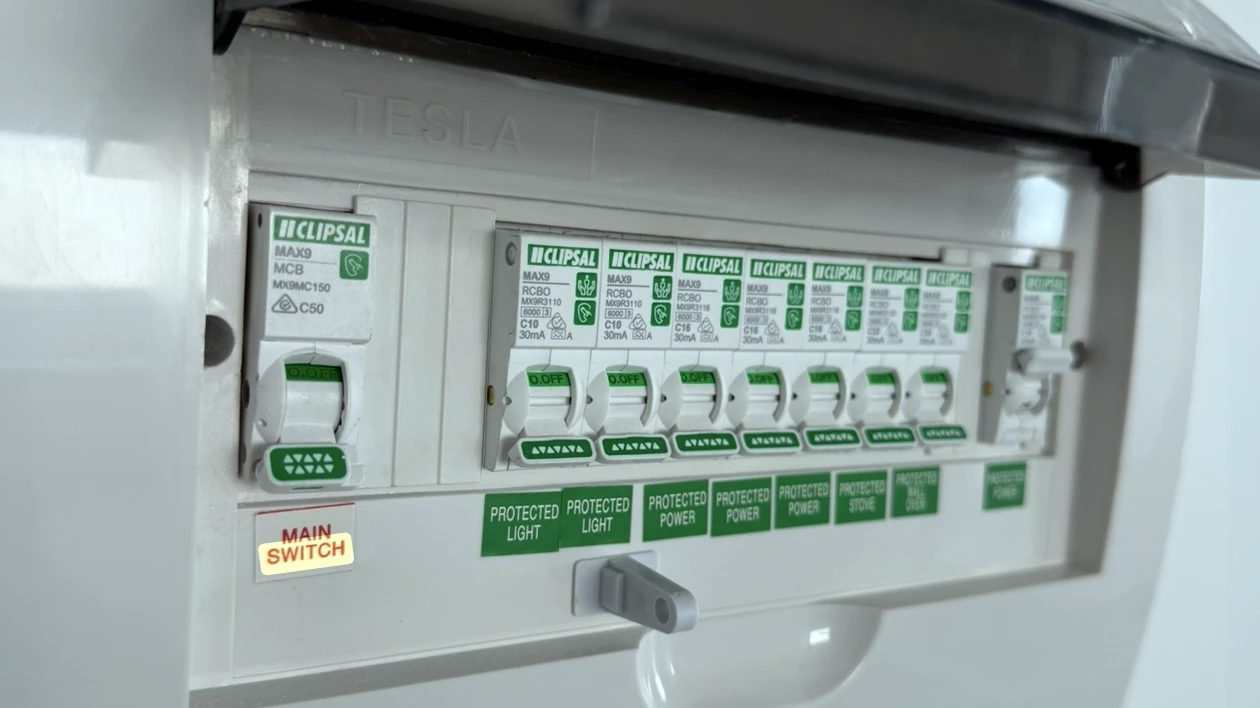
Plug-in surge protectors are a smart first layer, but they only cover the devices sitting on them. For proper cover, a Level 2 electrician can install a surge protection device at your switchboard so every circuit in the house is protected, from your lights and oven through to your hardwired electronics. It is the same idea as a plug-in unit, scaled up to guard the entire property, and it often pairs well with a switchboard upgrade on older homes.
Moonlight Electrical is a family-owned and operated team of Level 2 ASP accredited electricians servicing the wider Western Sydney area, with a 5.0 Google rating across our reviews. We quote per job, not per hour, so you know the cost before we start, and every job is backed by our Lifetime Labour Guarantee and 7-year warranty. We are available 24/7 for electrical emergencies, and seniors receive a 10% discount.
Book before midday and we will be there within 60 minutes, or your service call is free.
Call us on 0401 019 632 to book a switchboard surge protection installation or an electrical safety inspection.