



Why Sydney homeowners are adding outdoor power points
Outdoor entertaining, electric vehicle charging, garden lighting, pool equipment, and the rise of smart home devices have all driven a sharp increase in demand for safe, permanent outdoor power. Running an extension lead from inside the house is a common workaround, it’s also a leading cause of electrical accidents and a clear breach of safe-work practice in wet weather.
A properly installed outdoor power point gives you reliable, weatherproof access to electricity exactly where you need it. The most common installation locations we see across Sydney homes:
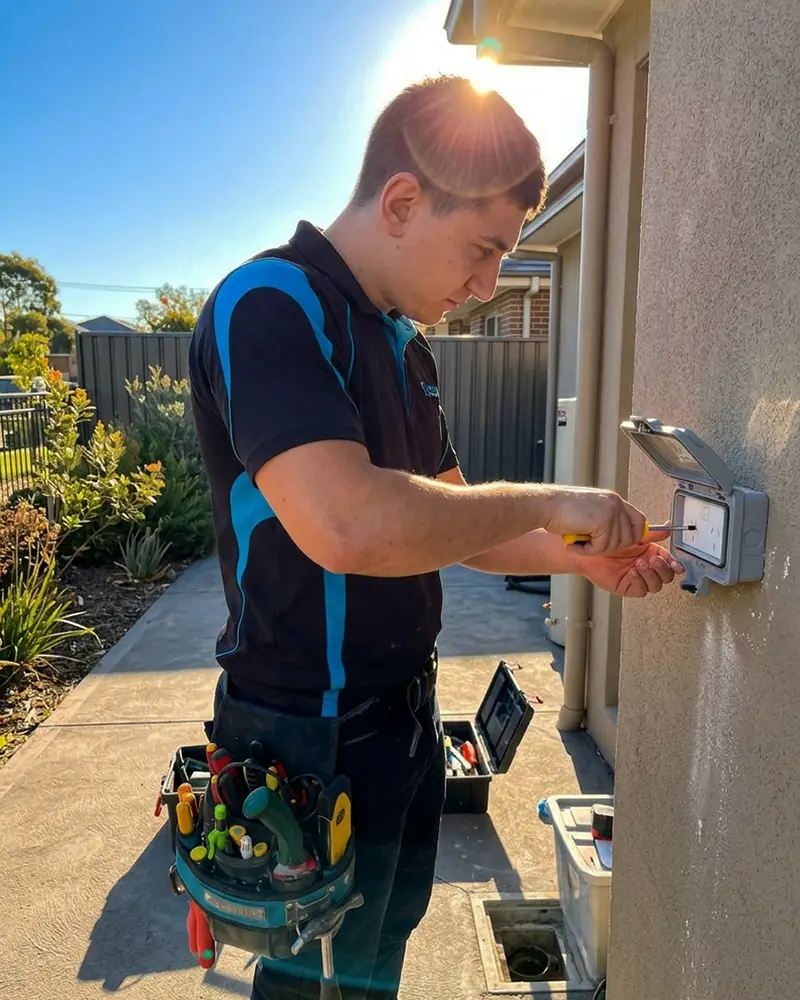
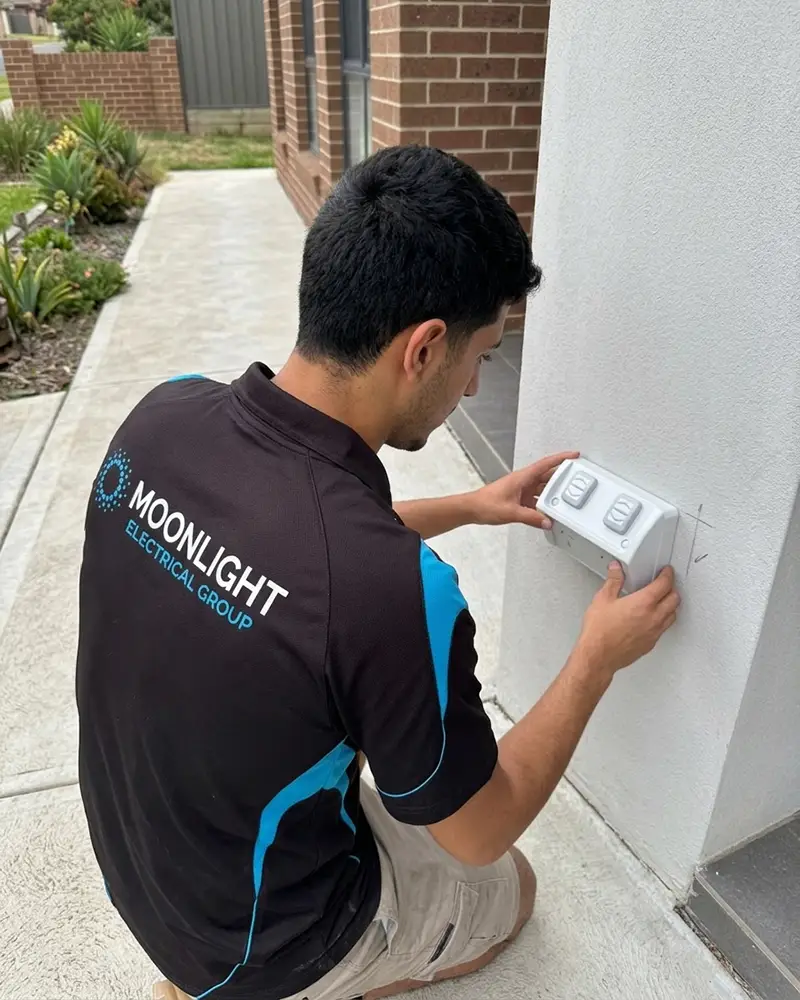
What’s included in a Moonlight outdoor power point installation
Every job includes the full installation, not just the device. We handle the cabling, mounting, switchboard work, testing, and certification end to end:
- On-site assessment of the proposed location, switchboard capacity, and cable run.
- Supply of a high-quality weatherproof power point, Clipsal, HPM, or PDL by default. Customer-supplied units are fine if you have a specific finish in mind.
- Cable run from the switchboard or nearest junction, with the correct wall penetration sealed against water ingress.
- Installation on the wall, fence, or mounting post with the appropriate bracket, including outdoor power point mounting posts where there’s no nearby structure.
- Connection to an RCD-protected circuit. If the existing switchboard isn’t RCD-protected, we can quote you for a safety switch installation or switchboard upgrade as part of the same job.
- Testing under load and earth-loop verification.
- Certificate of Compliance for Electrical Work (CCEW) lodged with the network operator.
We can also handle any indoor powerpoint installations you’d like.
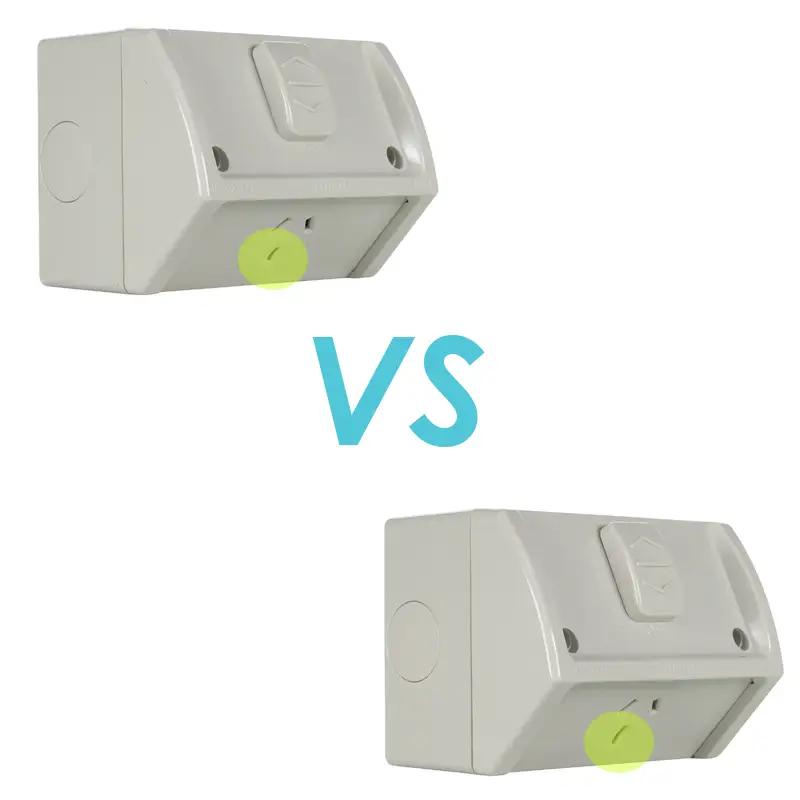
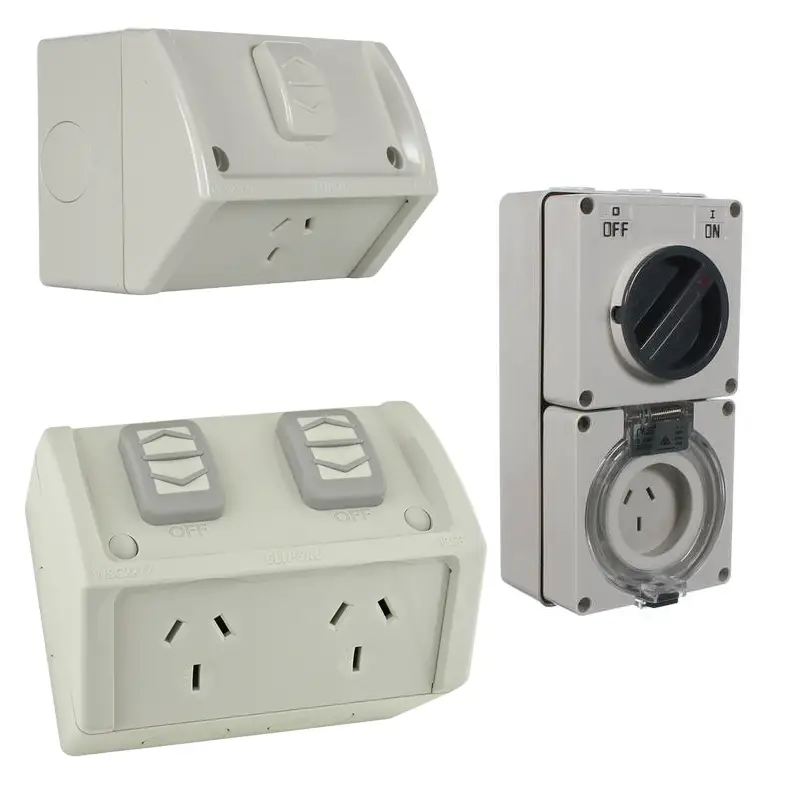
10 amp vs 15 amp outdoor power points
Most household outdoor power points are 10 amp, the same as standard indoor sockets. They run pretty much everything you’ll plug into them: lights, BBQs, power tools, smart devices, USB chargers, small appliances.
A 15 amp outdoor power point is a different size (you’ll see a wider earth pin) and is required for higher-load equipment such as caravans, larger spa pumps, commercial-grade pressure washers, and some electric heaters. If you’re installing for a caravan or RV, ask for 15 amp during the assessment, retrofitting later means a fresh cable run.
5-star service you can trust
Why our customers choose us…


Frequently Asked Questions
Do I need an electrician to fit an outside socket?
Yes. In NSW, all fixed electrical work, including installing, replacing, or relocating an outdoor power point, must be carried out by a licensed electrician under the Home Building Act 1989. DIY installation of any fixed wiring is illegal, voids your home insurance, and is one of the most common causes of household electrical fires. The only outdoor electrical work a homeowner can legally do without a licence is plugging an appliance into an existing power point.
Can an electrician add an outdoor outlet to an existing circuit?
In most cases, yes, provided the existing circuit has spare capacity and is RCD-protected. If your home was wired before 2003 and hasn’t been upgraded, the existing circuit may not have an RCD (safety switch), in that case we’ll need to either run a new circuit from the switchboard or install an RCD as part of the job. We confirm this during the quote so there are no surprises on the day.
How much does it cost to add an outside outlet to a brick wall?
Brick walls cost slightly more than weatherboard or fibre cement because of the masonry drilling and longer install time. Expect $40–$80 added to the prices above for a single brick penetration. Double-brick or rendered cavity walls take longer than single-brick veneer.
Can you install an outdoor power point on a fence or post if there’s no nearby wall?
Yes. We install outdoor power points on dedicated mounting posts (often called “power point posts” or “GPO posts”) where there’s no suitable wall. Common locations include the centre of a garden, beside a pool, or in a courtyard. The post is set into a concrete footing and connected back to the house via a buried conduit.
Are weatherproof power points the same as IP-rated power points?
They’re related but not identical. “Weatherproof” is a general label; IP rating is the specific Australian Standard measurement of how much dust and water the unit can withstand. All Moonlight installations use units with a published IP rating of at least IP54, with IP56 or IP66 specified for exposed and coastal locations.
20+
Years of experience
1hr
Emergency Response Time
24/7
Every day of the year
100%
Satisfaction Guarantee