

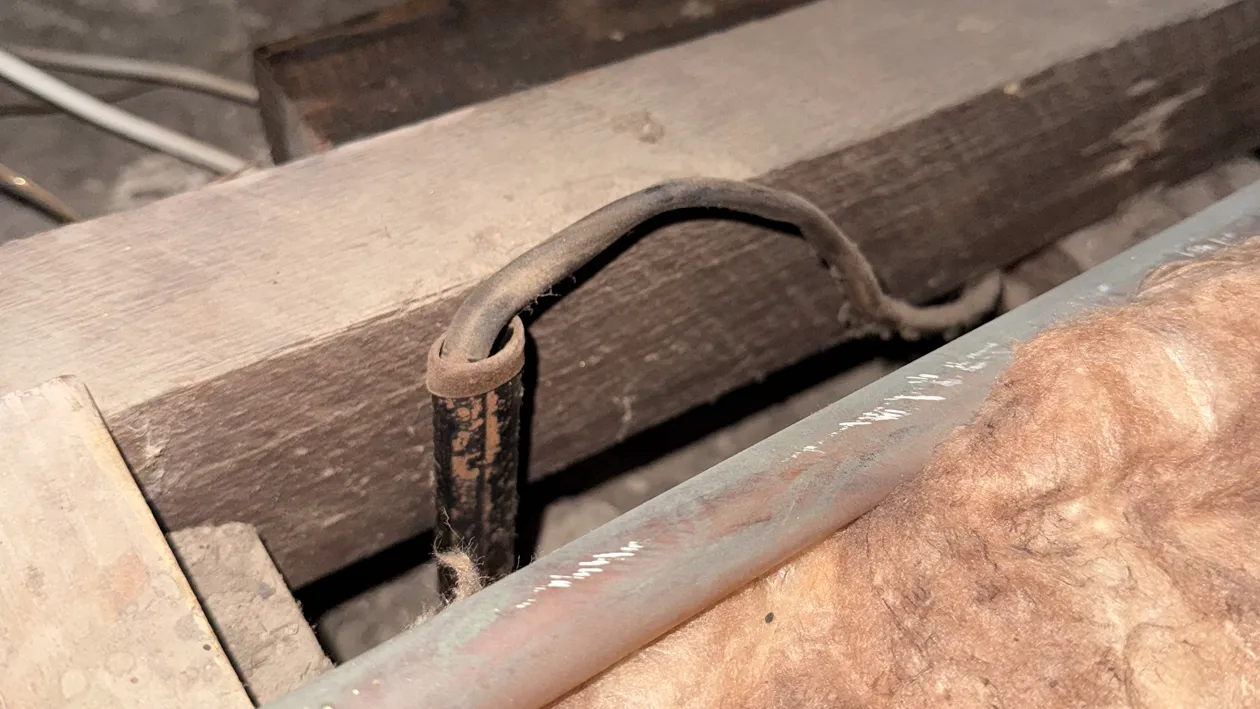
VIR cable (Vulcanised Indian Rubber cable) is an obsolete and potentially dangerous type of electrical wiring found in homes built before the 1960s. It features a copper conductor coated in natural rubber and often wrapped in a cotton braid outer sheath. Over the decades, the rubber insulation dries out, cracks, and crumbles, exposing live conductors and creating a serious fire hazard. To make matters worse, VIR wiring in many older Australian homes runs through conduits and switchboards that contain asbestos-laced materials.
If your home was built between the 1920s and 1960s and has never been rewired, there is a strong chance VIR cable is still inside your walls and ceiling. This guide covers how to identify it, the risks it poses, and what to do about it.
VIR wiring has a distinctive appearance. It typically looks like a thick, dark-brown or black wire with a woven fabric outer covering. Over time, the cotton braid frays and the rubber beneath becomes powdery or brittle. It looks nothing like the smooth PVC-coated wiring used in modern homes.
Here is a quick visual checklist to help you determine whether your home contains VIR cable.
The Diagnostic Checklist
1. Age of the Home
Homes built before 1960, particularly those from the 1930s through to the 1950s, are the most likely to contain VIR wiring. If your property has never undergone a rewire or major electrical renovation, the original wiring may still be in place.
2. Outer Sheath
Look for a woven cotton braid covering the cable. In some installations, VIR cable was run inside lead sheathing or a tougher rubber outer layer known as CTS (Cab Tyre Sheathed). The cotton braid often appears grey, brown, or blackened with age.
3. Inner Insulation
The rubber insulation beneath the braid will have hardened and degraded over time. It often appears crumbly, powdery, or has cracked away from the conductor entirely. The material may flake when disturbed and can leave a dark residue.
4. Conductor Appearance
VIR cable uses tinned copper conductors, which have a silvery appearance rather than the bright copper colour you see in modern wiring. If you can see exposed conductor through cracked insulation, this is a major warning sign.
The Flashlight Test (Do Not Touch the Wiring)
If you suspect VIR cable is present, do not handle or strip the wiring. Instead, shine a torch on any visible wiring in your roof cavity, under the house, or inside your switchboard. If the outer casing looks like woven fabric, if the rubber is flaking or has a powdery texture, or if the wire appears brittle and cracked, stop immediately and call a licensed electrician.
Common mistake: Some homeowners poke or strip the cable to check what is underneath. This is extremely dangerous. You risk contact with live conductors and may release toxic dust from degraded insulation or nearby asbestos-containing materials.
Does VIR Cable Contain Asbestos? The Real Risks of 1950s Wiring
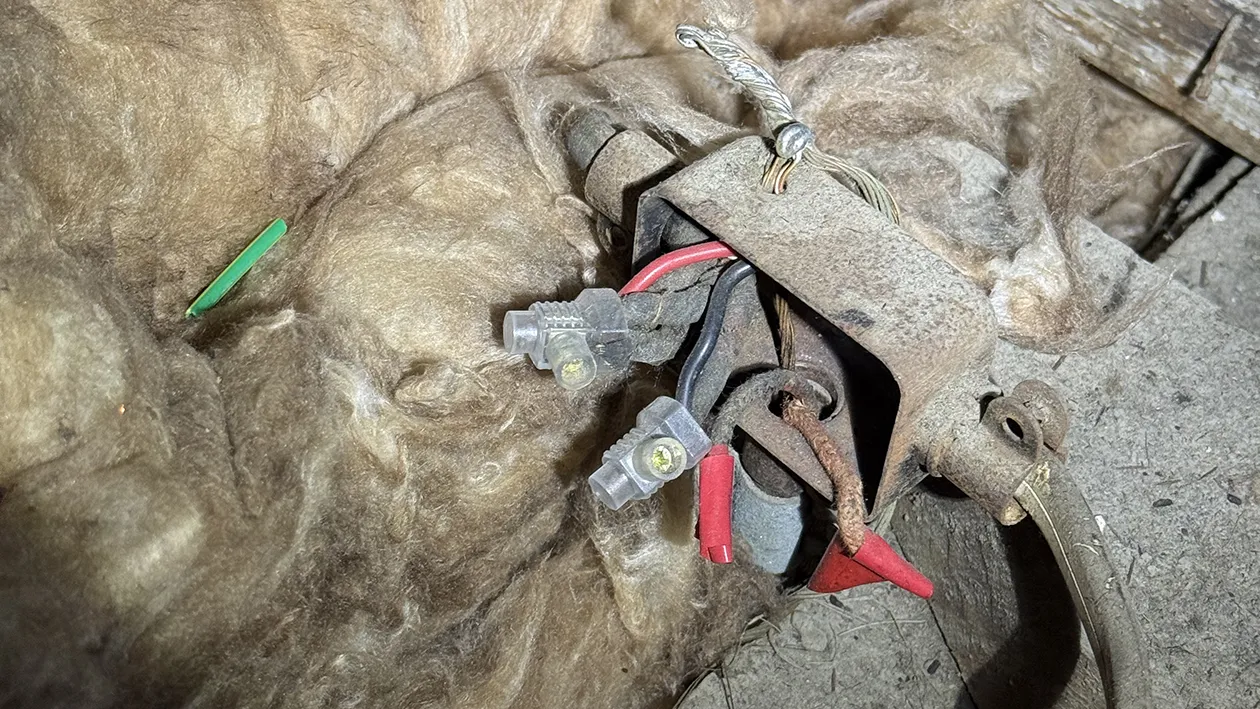
VIR cable itself is primarily made of rubber, cotton, and copper. However, the infrastructure surrounding VIR wiring in pre-1960s homes frequently contains asbestos. Switchboard backing boards, electrical conduits, protective cable sleeves, and junction box linings from this era were commonly manufactured with asbestos-based materials.
This creates a double-threat situation when VIR wiring is present:
- Fire hazard: The degraded rubber insulation cracks and falls away from the conductor over time. This exposes live wiring, which can arc against nearby surfaces and ignite ceiling timbers, insulation batts, or accumulated dust.
- Health hazard: Disturbing VIR wiring, even during a simple inspection, can release fine asbestos fibres from surrounding materials. Electricians working in roof cavities of older homes are considered a high-risk occupation for asbestos exposure for exactly this reason.
Is Any Level of Asbestos Exposure Dangerous?
There is no safe threshold for asbestos exposure. While prolonged or repeated exposure carries the highest risk, even a single high-dose exposure event can trigger serious conditions including mesothelioma and asbestosis. This is why disturbing old wiring without proper precautions is so dangerous. You may not realise asbestos-containing materials are present until fibres have already been released into the air.
What to Do If You Suspect VIR Wiring
- Do not disturb the wiring or any materials surrounding it.
- Tape off the area if the wiring is accessible (for example, in a roof cavity or under a house).
- Do not vacuum any dust or debris near the wiring. A standard vacuum will spread asbestos fibres through the air.
- Call a licensed electrician to assess the wiring and advise on a full house rewire.
- If you suspect asbestos is present, contact a licensed asbestos assessor or occupational hygienist before any work begins.
Can You Still Use VIR Cable?
No. VIR cable is non-compliant with current Australian wiring standards (AS/NZS 3000) and cannot legally remain in service once identified. It must be replaced entirely. There is no way to repair, re-insulate, or extend the life of VIR wiring. The rubber insulation has a finite lifespan and once it has degraded, the cable is permanently compromised.
The two modern cable types that replace VIR are PVC and XLPE.
VIR vs. Modern Wiring: Comparison
| Criteria | VIR (Obsolete) | PVC (Standard) | XLPE (Heavy-Duty) |
|---|---|---|---|
| Insulation Material | Natural rubber + cotton braid | Polyvinyl chloride | Cross-linked polyethylene |
| Lifespan | 25–40 years (expired) | 40–50+ years | 40–50+ years |
| Fire Resistance | Very poor. Rubber dries and cracks | Good. Self-extinguishing | Excellent. High heat tolerance |
| Insulation Integrity | Fails with age. Crumbles and exposes conductors | Remains flexible and intact | Highly resistant to heat and moisture |
| AS/NZS 3000 Compliant | No | Yes | Yes |
| Typical Use | Pre-1960s residential | Standard residential wiring | Commercial, mains, high-load circuits |
PVC or XLPE: Which Is Right for Your Home?
For most residential rewires, PVC-insulated cable is the standard choice. It is cost-effective, widely available, and meets all current Australian wiring standards for domestic installations.
XLPE cable is used where higher heat resistance or greater current-carrying capacity is required, typically for consumer mains connections, commercial switchboards, and high-load circuits such as three-phase power supplies. Your electrician will specify the appropriate cable type based on your property’s requirements.
What Happens Next: The Rewire Decision
If you have identified VIR cable in your home, the path forward is a full or partial house rewire. The process typically involves:
- A licensed electrician inspects the full extent of the VIR wiring.
- If asbestos is suspected, a licensed asbestos assessor inspects before electrical work begins.
- All VIR cable is removed and replaced with modern PVC or XLPE wiring.
- The switchboard is upgraded to a modern safety switch board with RCDs and circuit breakers.
- A Certificate of Compliance (CCEW) is issued to confirm all work meets current standards.
The History of VIR Cable
VIR cable was the dominant wiring method in Australia from the early 1900s through to the late 1950s. The name “Vulcanised Indian Rubber” refers to the natural rubber sourced from plantations in British India and Southeast Asia, which was treated with sulphur (vulcanised) to improve its durability and heat resistance.
At the time, VIR was considered a significant improvement over earlier wiring methods. The rubber insulation provided reasonable protection against electrical faults, and the cotton braid outer sheath offered mechanical protection during installation.
However, natural rubber has a limited lifespan. Over 30 to 50 years, it dries out, hardens, and loses its insulating properties. By the late 1950s and early 1960s, the electrical industry in Australia and globally had transitioned to PVC-insulated cable, which offered far greater longevity, moisture resistance, and fire safety.
Key Terminology
| Abbreviation | Meaning |
|---|---|
| VIR | Vulcanised Indian Rubber. The original rubber cable insulation |
| CTS | Cab Tyre Sheathed. A tougher rubber outer casing used on some VIR cables |
| PVC | Polyvinyl Chloride. The modern standard for residential electrical wiring |
| XLPE | Cross-Linked Polyethylene. High-performance cable for commercial and mains use |
| TPS | Thermoplastic Sheathed. The flat twin-and-earth cable used in most Australian homes today |
Any home in Sydney built before the mid-1960s that has not been rewired should be inspected by a licensed electrician. If VIR cable is found, it needs to be replaced: not repaired, not patched, but fully replaced with modern compliant wiring.
Need a VIR Cable Inspection or House Rewire?
Moonlight Electrical is a family-owned electrical business based in Merrylands, servicing all of Sydney. We hold NSW Electrical Contractor Licence 373818C and Level 2 ASP accreditation, so we can handle everything from a VIR cable assessment through to a complete house rewire and switchboard upgrade, including the consumer mains connection.
We quote per job, not per hour, so you know the cost before we start. All work is backed by our Lifetime Labour Guarantee and 7-year warranty on electrical systems.
Call us on 0401 019 632 or request a quote online.