

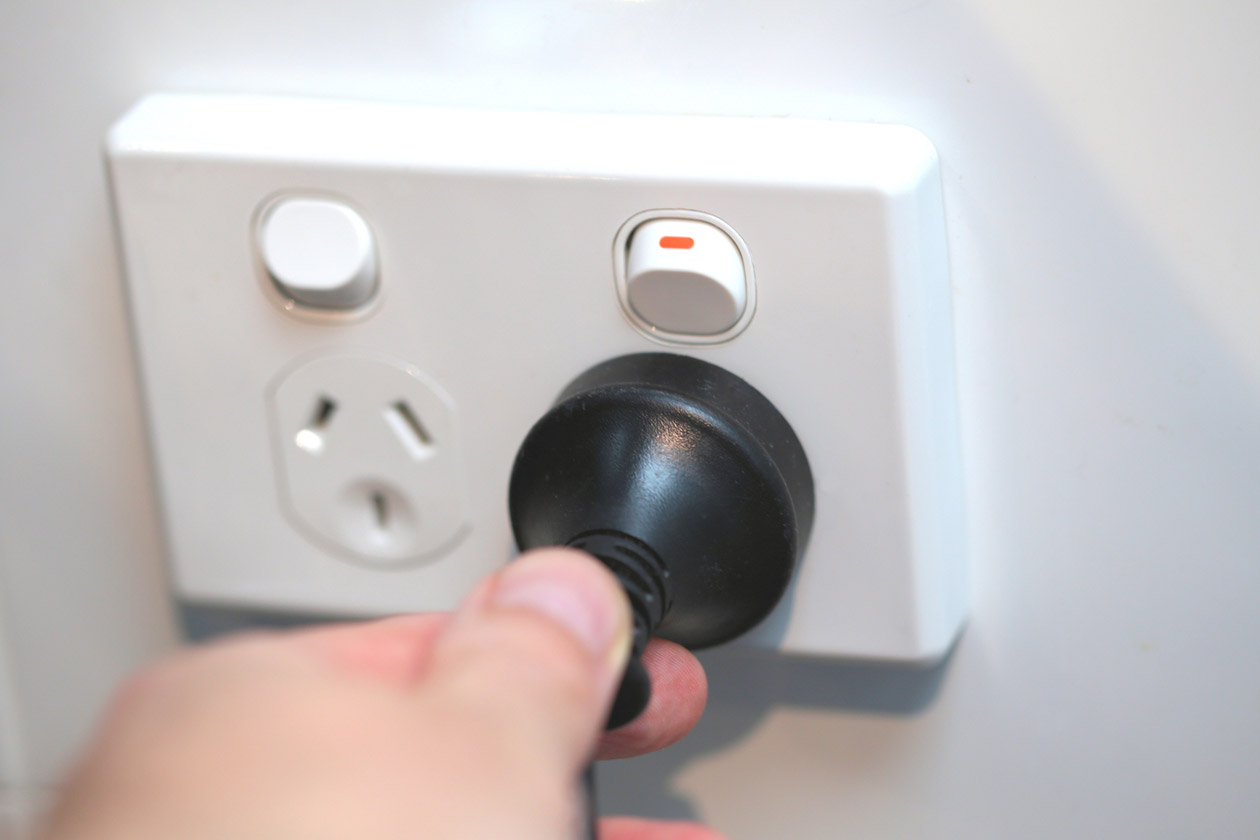
How to Tell if Your Power or Device is AC or DC
The easiest way to tell is by checking the power source. Wall outlets almost always provide AC power. For individual devices, look for a label or power adaptor. The symbol for DC is a solid line with a dashed line below it (⎯ / – – -), while the symbol for AC is a wavy line (~).
The 3-Step Identification Checklist
Step 1: Check the Power Source
- Is it a wall outlet? It’s AC
- Is it a battery? It’s DC
- Is it a USB port? It’s DC
- Is it a car charger socket? It’s DC
Step 2: Find the Label on the Device or Power Brick
Look for the “INPUT” and “OUTPUT” information. On most adaptors, this text is moulded into the plastic or printed in small white text. Check all sides of the adaptor – manufacturers often hide this information on the side that faces the wall.
Step 3: Decode the Symbols
- ~ means AC
- ⎯ over – – – means DC
- V stands for Volts
- A stands for Amps
- W stands for Watts
Try This Now
- Grab your phone charger right now
- Find the small text on the plug (you might need good lighting)
- Look for the “INPUT” line – you’ll see “100-240V~” showing it takes AC power from your wall
- Now look for the “OUTPUT” line – you’ll see something like “5V ⎯ 2A” showing it delivers DC power to your phone
Self-Check Method: If the device has a large, heavy power adaptor (a “wall wart” or “brick”), it’s almost certainly a DC device that needs to convert the AC from the wall. No brick? It’s probably running on AC directly.
AC vs DC: Which is Better and Why?
AC is better for power transmission over long distances, which is why it’s used for the power grid. DC is better for sensitive electronics and storing energy in batteries. Neither is “better” overall – they’re simply optimised for different purposes.
| Feature | Alternating Current (AC) | Direct Current (DC) |
|---|---|---|
| Direction of Flow | Reverses direction 50-60 times per second | Flows in one direction constantly |
| Primary Use | Power grids, wall outlets, large appliances (motors, heaters) | Batteries, solar panels, electronics (laptops, phones, LED lights) |
| Symbol | ~ | – over — |
| Voltage in Australia | 230-240V from wall outlets | Various (5V USB, 12V car, 1.5V AA battery) |
| Best For | Transmitting power efficiently over kilometres | Powering sensitive electronics and storing energy |
| Real-World Example | Your home’s power points | Your car battery or laptop’s USB-C port |
| Can You Feel It? | Creates the “buzz” you feel from faulty appliances | Smooth, constant flow (like static shock) |
What Happens if You Plug an AC Device into DC Power (or Vice Versa)?
Plugging a device into the wrong type of current can permanently damage it. An AC device may not work at all on DC power, while a DC device connected directly to an AC outlet without a converter will likely burn out its internal components within seconds due to the alternating current and higher voltage.
Troubleshooting Guide
Problem: I plugged my Australian laptop (240V AC) into a US outlet (110V AC)
Solution: Most modern laptop chargers are dual-voltage (check for “INPUT: 100-240V~”). You likely only need a simple plug adaptor. If it’s not dual-voltage, the laptop may charge slowly or not at all, but won’t be damaged.
Problem: I tried to wire a 12V DC LED strip directly to a 240V AC wall outlet
Solution: Disconnect immediately if it hasn’t already failed. You need a proper LED driver (AC-to-DC converter) rated for your LED’s voltage and wattage. The LED strip is likely damaged if exposed to AC mains power.
Problem: My device says “DC IN” but I only have access to wall power
Solution: You need the correct power adaptor. Match three things: output voltage (V), minimum amperage (A), and plug polarity (+ inside or outside).
Key Takeaways: The Golden Rules of Power
- Always match the current type (AC/DC)
- Always match the voltage (V) – a 10% variance is usually safe
- Ensure the power source can supply at least the required amperage (A)
- When travelling internationally, check if your devices are dual-voltage before buying converters
Where You Find AC and DC: A Room-by-Room Guide
In a typical Australian home, the wall outlets provide 230-240V AC power. This powers large appliances like fridges and washing machines directly. However, most of your electronics (TV, computer, smart speakers) use an adaptor to convert that AC power to DC internally.
Best For:
Best for Wall Outlets: AC
Why: It’s efficient for energy companies to deliver over the long distances from power stations to your home. AC voltage can be easily stepped up or down using transformers.
Best for Batteries: DC
Why: Batteries store and deliver energy in a constant, one-way flow. You cannot store AC power in a battery – it must be converted to DC first for charging.
Best for Solar Panels: DC
Why: Solar panels generate DC electricity naturally from photons hitting silicon cells. An “inverter” is required to convert this DC power to AC power for home use or feeding back to the grid.
Best for Electric Vehicles: DC (for the battery) and AC (for the motor)
Why: EVs store energy in DC batteries but often use AC motors for efficiency. The onboard inverter handles the conversion.
Quick Reference: Common Household Items
Always AC (Direct from Wall):
- Washing machines and dryers
- Conventional ovens and cooktops
- Air conditioners (central units)
- Most power tools with cords
Always DC (With Adaptor or Battery):
- Mobile phones and tablets
- Laptops and monitors
- LED light bulbs
- Gaming consoles
- Routers and modems
- Doorbell cameras
- Portable speakers
Can Be Either:
- Some desk fans (AC if plugged in, DC if USB-powered)
- Christmas lights (older ones are AC, newer LED strings are often DC)
- Electric motors (depends on application)
Practical Next Steps
If you’re planning any electrical work or installations:
- For Solar Installation: Understand inverter types and sizing – this is the critical component that converts your panels’ DC output to useable AC power
- For International Travel: Check all your device labels now and make a list of what needs converters versus simple plug adaptors
- For DIY Projects: Always use proper AC-to-DC converters rated for your project’s requirements – never attempt direct connections between AC and DC systems
Remember: When in doubt, consult the device manual or a qualified electrician. In Australia, any mains electrical work must be performed by a licensed electrician – it’s not just good practice, it’s the law.