



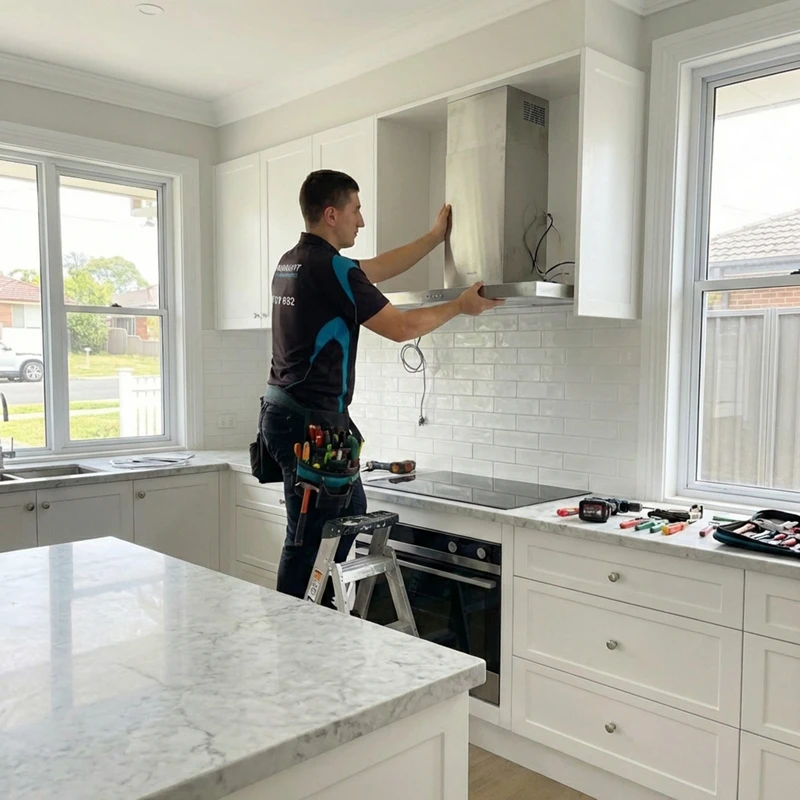
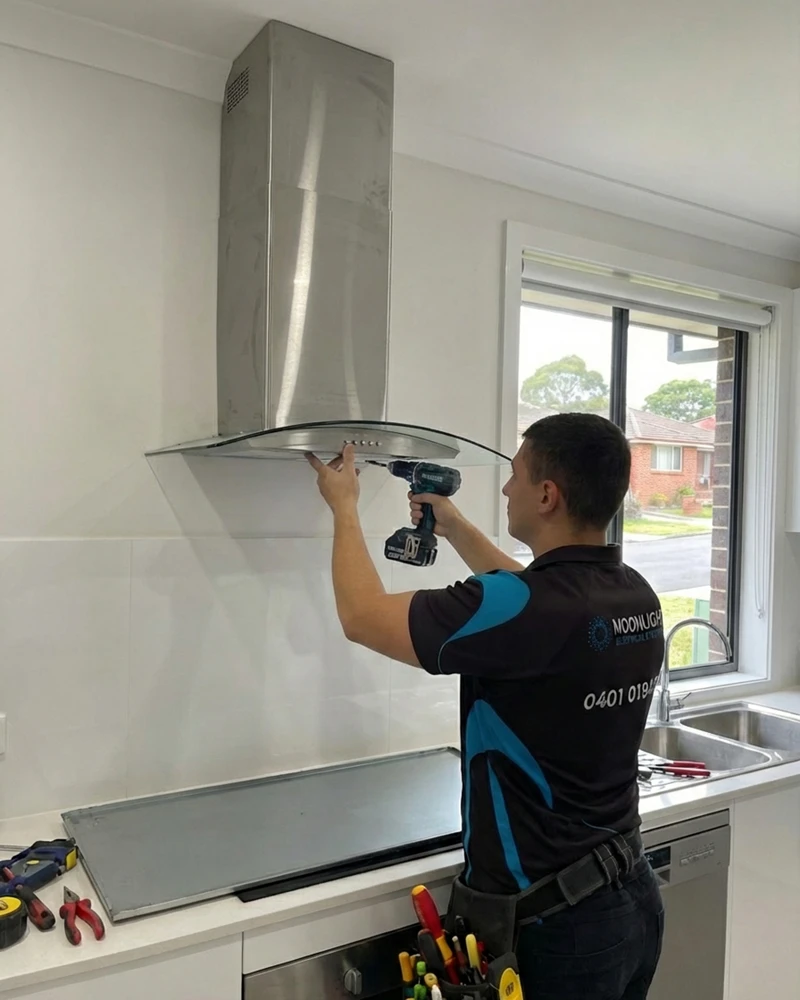
Need a rangehood installation in Sydney? Moonlight Electrical provides professional rangehood installation for homes and kitchens across Western Sydney and the greater Sydney metro area. Whether you’re upgrading an old exhaust fan, fitting a brand-new canopy rangehood, or connecting ducting to vent outside, our licensed electricians handle the complete job — electrical connection, mounting, ducting coordination, and compliance testing. You’ll get an upfront price before any work begins, and every installation is backed by our Lifetime Labour Guarantee and 7-year warranty on electrical systems.
Why Sydney Homeowners Trust Moonlight Electrical
Moonlight Electrical is a family-owned and operated business based in Western Sydney. We hold NSW Electrical Contractor Licence 373818C and Level 2 ASP accreditation, which means we’re qualified for everything from standard appliance installations like rangehood wiring through to switchboard upgrades if your kitchen circuit needs more capacity.
We’ve built our reputation on doing the job right the first time. Every installation includes a Certificate of Compliance for Electrical Work (CCEW), and we photograph our work so you have a record of exactly what was done behind your walls and above your ceiling. We quote per job, not per hour — so you’ll never watch the clock while we work.
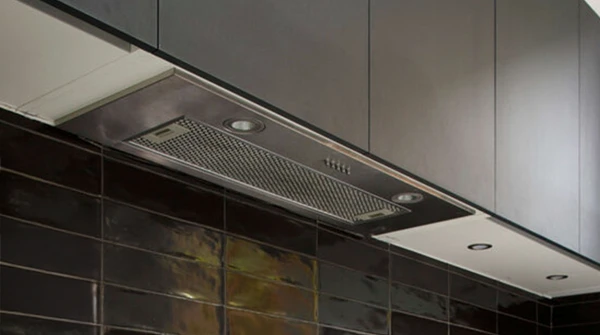
Ducted vs Recirculating Rangehoods
This is one of the most common questions we hear from homeowners planning a rangehood installation. Here’s the practical difference:
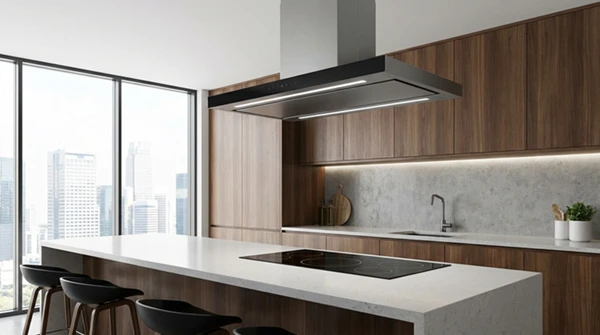
Ducted rangehoods
Vent air outside through ducting that runs through your wall or roof. They’re more effective at removing heat, moisture, and cooking odours from your kitchen. In Australia, ducted rangehoods are generally the preferred option — particularly in standalone houses where external venting is straightforward. However, they do require ducting to be installed if it doesn’t already exist, which adds to the installation scope.
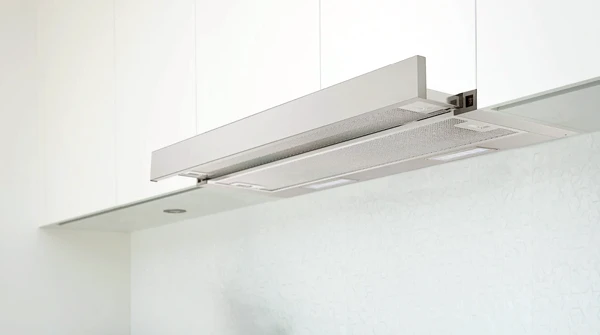
Recirculating rangehoods
Filter the air through charcoal filters and push it back into the kitchen. They’re easier to install because there’s no external ducting required — just the electrical connection and mounting. This makes them the practical choice for apartments, units, and kitchens where running ducting to an external wall or roof isn’t feasible.
There’s no legal requirement in Australia to have a ducted rangehood in residential kitchens, though the Building Code of Australia does require adequate ventilation for habitable rooms. Your electrician can advise on which option suits your kitchen and building type.




5-star service you can trust
Why our customers choose us…


Rangehood Installation FAQs
Do you need an electrician to install a rangehood?
Yes. In NSW, any electrical work — including hardwiring a rangehood or installing a new power point for one — must be carried out by a licensed electrician. This applies even if you’re replacing a like-for-like unit. Many rangehoods are hardwired rather than plugged in, which makes this licensed electrical work under NSW fair trading regulations. Installing a rangehood yourself without an electrical licence is illegal and voids your home insurance if anything goes wrong.
How much does it cost to install a rangehood?
Rangehood installation costs in Sydney depend on the type of rangehood, your existing electrical setup, and whether ducting is required. A straightforward replacement where the wiring and ducting already exist is at the lower end of the scale. A new ducted installation requiring wall or roof penetration, new ducting runs, and a dedicated circuit will cost more. We provide a fixed quote before starting so there are no surprises. Call us for a quote specific to your kitchen.
Do rangehoods need to be ducted outside in Australia?
Not necessarily. While ducted rangehoods that vent outside are more effective, recirculating models that filter and recirculate air are perfectly acceptable in Australian homes. The Building Code of Australia requires adequate ventilation in kitchens, but doesn’t mandate external ducting for residential rangehoods. Ducted systems are generally preferred for standalone houses, while recirculating systems are common in apartments where external venting may be restricted by strata rules.
Can I install a rangehood myself?
You can physically mount a rangehood to the wall or cabinetry, but you cannot legally connect it to the electrical supply yourself unless you hold a current electrical licence. In NSW, all electrical wiring work must be done by a licensed electrician. Attempting DIY electrical work risks electric shock, fire, and will void your insurance. The mounting and ducting work is also best left to a professional to ensure the unit is level, secure, and the ducting is properly sealed.
What is the difference between a rangehood and an exhaust fan?
A rangehood sits directly above your cooktop and captures steam, smoke, grease, and odours right at the source. An exhaust fan is typically mounted in the ceiling or wall of a room and removes general air from the space. Rangehoods are specifically designed for cooking areas and include grease filters to protect ducting and the motor. For kitchen use, a rangehood is significantly more effective than a ceiling exhaust fan because it captures contaminants before they spread through the room.
Are rangehoods hardwired?
It depends on the model. Many rangehoods — particularly canopy and integrated models — are hardwired directly to a junction box behind the cabinetry. Others, especially slideout and some fixed models, come with a standard plug that connects to a power point inside the cabinet above. Either way, a licensed electrician should complete the connection to ensure it’s safe and compliant. If your kitchen doesn’t have a power point or junction box in the right position, we can install one.
Is it better to vent a rangehood through the wall or roof?
Wall venting is generally preferred because it’s a shorter, more direct ducting run which means better airflow and easier installation. Roof venting is necessary when the cooktop is on an internal wall with no practical path to an external wall. Longer ducting runs and bends reduce extraction efficiency, so we always aim for the shortest route with the fewest turns. We’ll assess your kitchen layout and recommend the best option during the initial inspection.
20+
Years of experience
1hr
Emergency Response Time
24/7
Every day of the year
100%
Satisfaction Guarantee