

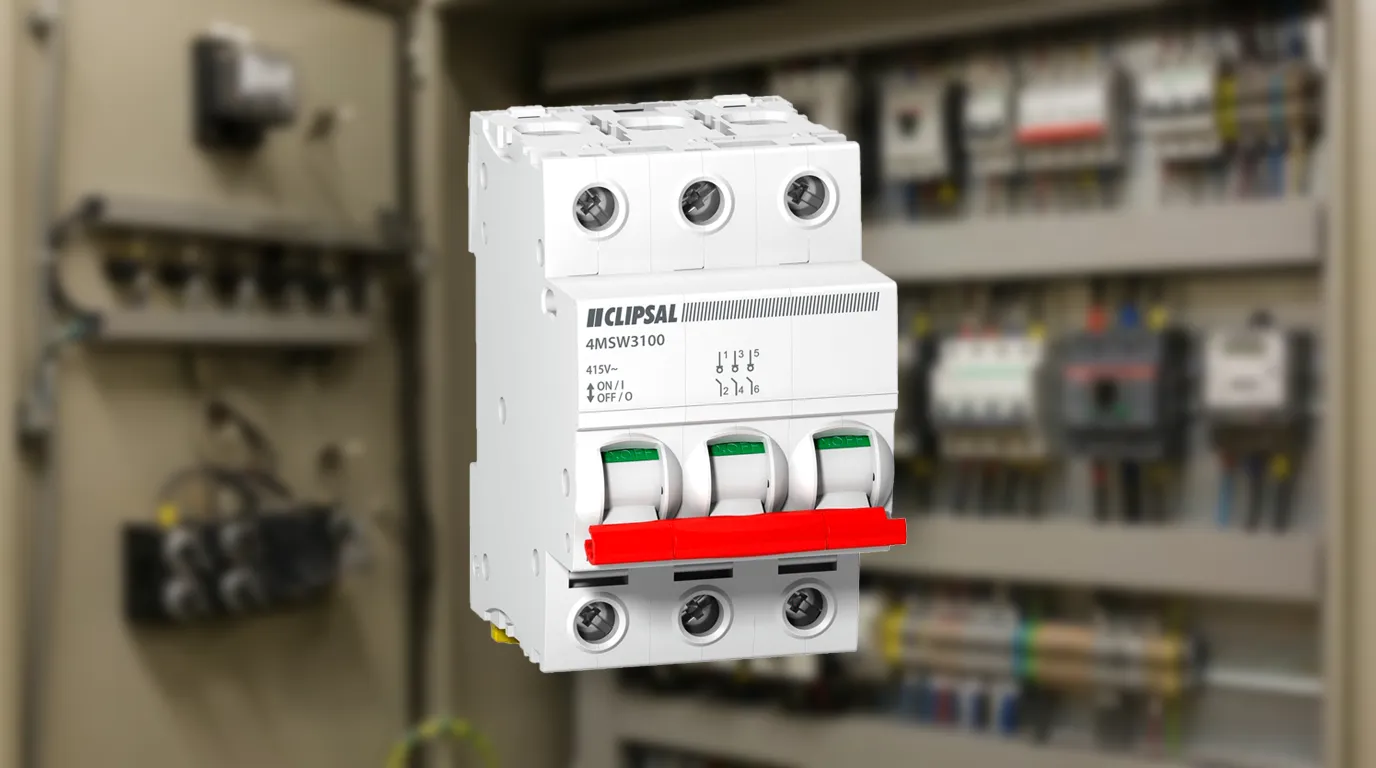
You can get 3-phase power at home by upgrading your connection through your local energy distributor and hiring a licensed electrician to upgrade your switchboard. The process typically costs between $3,000 and $6,000+ depending on whether your existing service line needs replacing. It’s essential for fast EV charging (22kW) or running heavy workshop machinery like welders and large motors.
This guide walks you through the entire process, from working out whether you actually need the upgrade to understanding exactly who does what during installation.
Do I Need 3-Phase Power? (Home & EV Assessment)
Before spending thousands on an upgrade, let’s work out if you genuinely need 3-phase power or if single-phase will handle your needs perfectly well.
The Usage Check
| Your Situation | Do You Need 3-Phase? |
|---|---|
| Standard home (lights, TV, fridge, washing machine) | No |
| Home + 7kW EV charger | Maybe—single-phase 32A is often enough |
| Home + 22kW EV charger | Yes |
| Home + ducted air conditioning + pool heat pump + EV | Yes—to balance the load across phases |
| Workshop with welders or heavy motors (3+ HP) | Yes |
The key factor is your total electrical load. Single-phase connections in Australia typically max out at 63 Amps, which translates to roughly 14kW of continuous demand. Once you start stacking high-draw appliances—ducted air conditioning pulling 8kW, a heat pump drawing 3kW, and an EV charger adding another 7kW, you’re pushing the limits.
Your Load Calculation List
Grab a pen and add up the wattage of your heavy appliances:
- Ducted air conditioning: _____ kW
- Pool heat pump: _____ kW
- EV charger: _____ kW
- Workshop equipment: _____ kW
- Hot water system: _____ kW
- Other large appliances: _____ kW
Total: _____ kW
If your total exceeds 14kW and multiple items run simultaneously, 3-phase power will distribute that load across three separate circuits, preventing overload and nuisance tripping.
How Much Does 3-Phase Installation Cost? (Breakdown)
The total cost depends on two separate components: what your network provider charges and what your electrician charges.
The Two-Part Cost Structure
Your network provider (Ausgrid, Energex, Powercor, etc.) handles everything from the street to your property boundary. They quote separately for running new cables from the pole or underground pit to your meter box location.
Your licensed electrician handles everything on your side of the meter, the switchboard upgrade, consumer mains cables, and coordinating the paperwork.
| Scenario | What’s Involved | Expected Cost |
|---|---|---|
| Scenario A (Easy) | 3-phase already available at the street, short overhead cable run, existing switchboard in good condition | $3,000 – $4,000 |
| Scenario B (Moderate) | 3-phase at the street, longer cable run, switchboard needs complete replacement | $4,000 – $6,000 |
| Scenario C (Complex) | Underground connection required, long driveway dig, transformer upgrade needed | $6,000 – $10,000+ |
The network provider’s portion typically ranges from $500 for a simple overhead reconnection to $5,000+ for extensive underground work. Your electrician’s portion, including the switchboard upgrade, new consumer mains, and labour, usually sits between $2,500 and $4,500.
What About Running Costs?
A common question: is 3-phase power cheaper to run? The honest answer is no—not directly. Your daily supply charge is often slightly higher with 3-phase, and the per-kilowatt-hour rate is typically identical. However, 3-phase motors run more efficiently than single-phase equivalents, which can reduce consumption for workshop equipment.
Here’s a quick way to check your current setup:
Walk outside and look at the cable connecting your house to the street (or the pit if you’re underground). Count the wires:
- Two wires (active + neutral): You have single-phase. The upgrade requires new cabling.
- Four wires (three actives + neutral): You may already have 3-phase available to your property. Your electrician just needs to connect and upgrade your switchboard.
If you spot four wires but your meter box only shows single-phase, you could save significantly on network costs, the infrastructure might already be there.
Step-by-Step Guide to Converting to 3-Phase
The upgrade process involves coordination between three parties: your electrician, the network provider, and your electricity retailer. Here’s how it unfolds.
Stage 1: Consultation and Application
Your licensed electrician visits your property to assess your electrical demand and inspect your current switchboard. They’ll determine what capacity you need (typically 63A or 80A per phase for residential) and prepare a Service Application to submit to your network provider.
This application includes details about your expected load, switchboard location, and any site-specific factors. Processing time varies by network, expect one to four weeks for approval.
Stage 2: Network Provider Quote
Once approved, your network provider sends you an offer detailing the connection cost and any infrastructure work required. This covers:
- Running new cables from the pole or pit to your property
- Installing or upgrading the fuses at the pole
- Any transformer upgrades if your street’s supply is insufficient
You’ll need to accept and pay this quote (or a deposit) before they schedule the work.
Stage 3: Switchboard Rough-In
Your electrician upgrades your switchboard to accommodate 3-phase supply. This involves:
- Installing a new 3-phase main switch
- Running new consumer mains cables from your switchboard to the meter position
- Reconfiguring circuits to balance loads across phases
- Installing any new circuit breakers for high-draw equipment
This work happens before the network crew arrives, so everything’s ready for connection.
Stage 4: The Network Connection
The network provider’s crew arrives for the “truck appointment.” They’ll:
- De-energise your existing supply (you’ll lose power temporarily)
- Connect the new 3-phase cables from the street
- Install new fuses at the pole or pit
- Energise the new supply
Your electrician typically needs to be present or available during this stage to make the final connections at your switchboard.
Stage 5: Meter Installation
Your electricity retailer (AGL, Origin, Energy Australia, etc.) arranges installation of a new 3-phase smart meter. This is sometimes coordinated with the network connection or scheduled separately within a few days.
Once the meter’s in, you’re fully operational on 3-phase power.
The Who-Does-What Cheat Sheet
| Party | Responsibilities |
|---|---|
| Licensed Electrician | Switchboard upgrade, internal wiring, consumer mains, application submission, circuit balancing |
| Network Provider (Ausgrid, Energex, SA Power Networks, etc.) | Street cables, pole fuses, transformer upgrades, connection from street to property |
| Electricity Retailer (AGL, Origin, etc.) | Meter supply and installation |
3-Phase EV Charging at Home: 7kW vs 22kW
If electric vehicle charging is your main reason for considering 3-phase, there’s a critical factor many people overlook: your car’s onboard charger capacity.
Understanding Onboard Charger Limits
Every EV has a built-in charger that converts AC power from your wall charger to DC power for the battery. This onboard charger has a maximum acceptance rate and installing a 22kW charger won’t help if your car can only accept 7kW.
| Vehicle | Onboard Charger Capacity | 22kW 3-Phase Benefit? |
|---|---|---|
| Tesla Model 3 (older) | 7.4kW | No—charges at same speed as single-phase |
| Tesla Model 3/Y (newer) | 11kW | Partial—faster than single-phase, but not full 22kW |
| BYD Atto 3 | 7kW | No—maxes out at 7kW regardless |
| Hyundai Ioniq 5 | 11kW | Partial benefit |
| Porsche Taycan | 22kW | Full benefit |
| BMW iX | 22kW | Full benefit |
The Future-Proofing Argument
Even if your current EV only accepts 7kW, there’s a case for installing 3-phase infrastructure now:
- Your next vehicle might have a higher-capacity onboard charger
- 3-phase balances your home’s total electrical load better
- Installation costs are lower when done as part of a single project
- Property value may benefit from the upgraded electrical capacity
However, if budget is tight and your current EV maxes out at 7kW, a single-phase 32A circuit delivers exactly the same charging speed at a fraction of the cost.
Before committing to the upgrade, it is worth calculating the real-world cost to charge an electric car in Australia to see if the investment makes sense for your daily commute.
Check Your Car’s Spec
Before committing to 3-phase for EV charging, look up your vehicle’s onboard charger rating. You’ll find this in:
- Your owner’s manual under “Charging Specifications”
- The manufacturer’s website
- The sticker inside the charging port door
If it shows 7kW or 7.4kW maximum AC charging, a 22kW 3-phase charger won’t make your car charge any faster. You’d be paying for capacity you can’t use—unless you’re planning for a future vehicle upgrade or have other high-draw equipment that justifies the investment.