

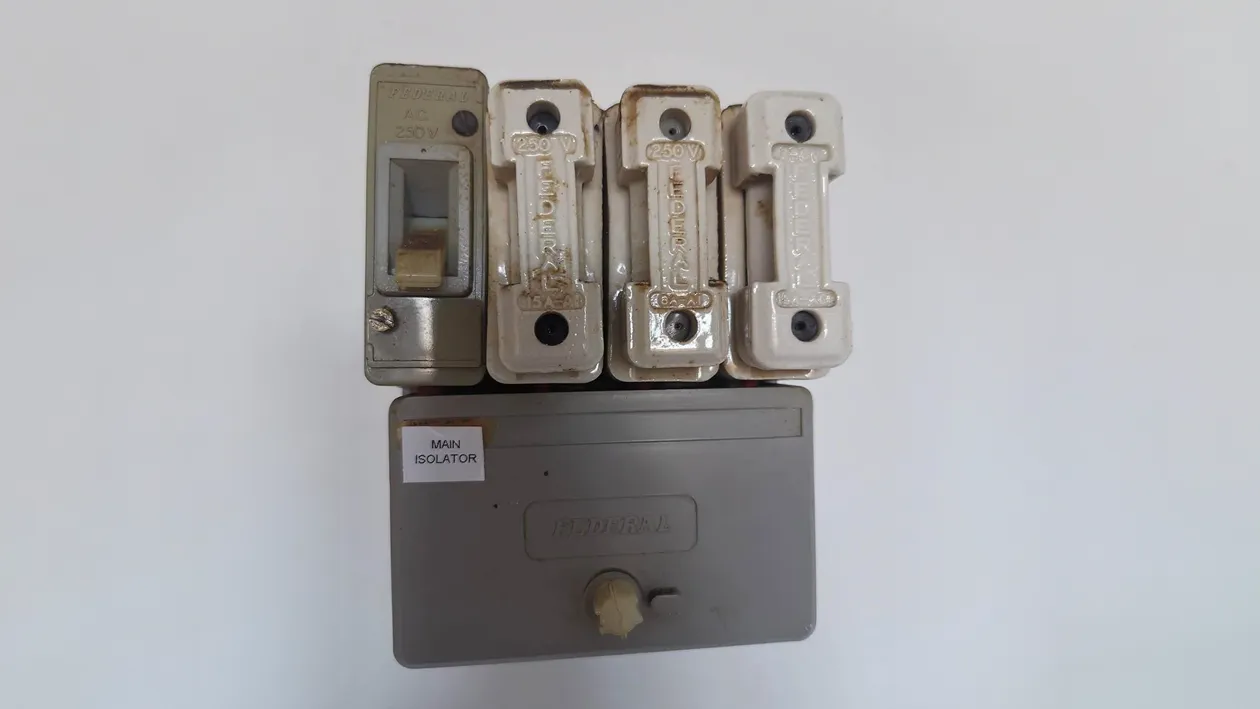
Power’s out. You’re standing in the dark wondering whether you’ve got a blown fuse, a tripped safety switch, or something more serious. Before you start flicking switches randomly, let’s work through this safely and get your lights back on.
Is This an Emergency? Immediate Safety Check
A blown fuse is a safety mechanism doing its job, it’s not usually an emergency. That said, certain signs mean you need to step away from the switchboard immediately.
Stop. Do not touch the switchboard if:
- You smell burning plastic or a strange “fishy” odour
- The fuse box feels hot
- You can see black scorch marks around switches or wiring
- There’s visible smoke or sparks
Any of these? Call 000 or an emergency electrician right now. Don’t attempt any DIY.
If none of those warning signs are present, you’re safe to investigate further.
First step: Head to your switchboard and identify what type of protection device you’re dealing with. Australian homes typically have one of three setups:
- Ceramic fuse wedges – Older homes (pre-1990s). Small porcelain blocks that pull out.
- Circuit breakers – Toggle switches that flip off when overloaded.
- RCDs/Safety switches – Usually have a “test” button and protect against electric shock.
Most homes built after the 1990s have circuit breakers and safety switches. Older homes may still have ceramic fuses, or a combination of both.
How to Tell if a Fuse is Blown
The diagnosis depends on your switchboard type.
For circuit breakers: Look for the switch sitting in the “OFF” position (flipped down) or stuck halfway between ON and OFF. That’s your culprit.
For ceramic fuses: This requires a closer look.
- Turn off the main switch first.
- Pull the ceramic wedge out of its holder.
- Look at the thin wire running between the two screws.
If the wire is broken, melted, blackened, or missing entirely, the fuse has blown.
Can a fuse look fine but still be blown? Yes. Hairline breaks aren’t always visible. If you’re unsure, replace the fuse wire anyway, it costs a few cents and rules out the issue entirely.
How to Fix a Blown Fuse and Restore Power
Your approach depends on whether you’ve got a modern switchboard or an older fuse box.
Resetting a Tripped Circuit Breaker (Modern Homes)
This is straightforward:
- Unplug the appliance you were using when the power cut out. Kettles, heaters, and hair dryers are common triggers.
- Find the tripped switch on your switchboard, it’ll be in the OFF or middle position.
- Push it firmly to OFF (all the way down), then flip it back to ON.
If the breaker trips again immediately, stop. You’ve got a “hard short” somewhere in the circuit, and that’s a job for a licensed sparkie.
Note: If the tripped switch has a ‘Test’ button (RCD/Safety Switch), it may be harder to reset. You often need to push it firmly all the way OFF before it will latch back ON.
Replacing Fuse Wire (Older Australian Homes)
If you’ve got ceramic fuses, here’s the safe replacement process.
You’ll need:
- A torch (you’re probably working in the dark)
- A screwdriver
- The correct amp fuse wire, 8A for lighting circuits, 16A or 20A for power circuits
The process:
- Turn off the main power switch. This is critical. Never work on a live switchboard.
- Remove the ceramic wedge from the blown circuit.
- Loosen the screws on either end and remove any old wire remnants.
- Thread new fuse wire through the centre tunnel of the wedge.
- Wrap the wire clockwise around each screw and tighten firmly. The wire should be taut but not stretched to breaking point.
- Reinsert the wedge into its holder.
- Turn the main power back on.
Important: Never install a larger amp wire than the circuit is rated for. Putting 20A wire in an 8A lighting circuit defeats the entire safety purpose and creates a fire risk.
Expert Tip: Check the colour dot on your ceramic fuse holder: White usually indicates 8A (Lights) and Red/Blue indicates 16A/20A (Power). Match the wire card to this colour.
Why Does My Fuse Keep Blowing?
If you’re replacing the same fuse repeatedly, the fuse isn’t the problem, something else is.
Common causes:
- Circuit overload – Too many high-draw appliances running simultaneously. Hot water systems, dryers, and kettles on the same circuit will trip it every time.
- Faulty appliance – A short circuit inside a toaster, kettle, or older appliance. These are frequent offenders.
- Wiring fault – Damaged insulation, rodent damage, or deteriorating connections inside walls. This one needs a professional.
The unplug test: Unplug everything connected to the affected circuit. Replace the fuse or reset the breaker. Then plug appliances back in one at a time. When the fuse blows again, you’ve found your faulty appliance.
When to Call an Electrician
Some jobs are safe for a confident DIYer. Others require a licensed professional.
Safe to DIY:
- Resetting a tripped circuit breaker
- Replacing fuse wire (if you’re comfortable doing so)
Call a sparkie:
- The fuse blows again immediately after replacing
- Multiple circuits are affected
- You can see damage, scorching, or melted plastic
- Your switchboard still uses ceramic fuses (upgrading to circuit breakers is strongly recommended)
- The fault is on the street pole or service line, this requires a Level 2 electrician, though your network provider (Ausgrid, Endeavour, Energex) typically handles these
What Does It Cost?
The fuse itself is cheap, a few dollars at most. The underlying problem might cost more.
Typical costs (AUD):
- Standard electrician call-out: $100–$180
- Switchboard upgrade (fuses to circuit breakers): $800–$2,500
If your home still runs on ceramic fuses, a switchboard upgrade is worth considering. Modern circuit breakers and safety switches offer better protection and are far easier to reset when something trips.
The Bottom Line
A blown fuse is usually a quick fix, reset the breaker or replace the fuse wire, and you’re back in business. But if fuses keep blowing, breakers keep tripping, or you spot any warning signs like burning smells or scorch marks, that’s your switchboard telling you something’s wrong.
Don’t take chances with electrical faults. If you’re unsure about anything or the problem keeps recurring, give the team at Moonlight Electrical a call. Whether you need a quick diagnosis, a switchboard upgrade, or emergency repairs, we’ll get your power restored safely. Contact us today to book a licensed electrician.